Kalshi & Stock Paper-Trading System
A Python system that prices Kalshi event contracts (weather, commodities and bitcoin) and runs classic stock strategies on a $10,000 paper account. Every trade is logged with the model’s probability, the market’s price and the outcome, so I can test whether the model is actually right.
- Role
- Designer and builder
- Context
- September–October 2026 · ongoing
- Individual / team
- Individual (personal project)
- Deliverable
- Python system + dashboard + trade log
Summary
Question
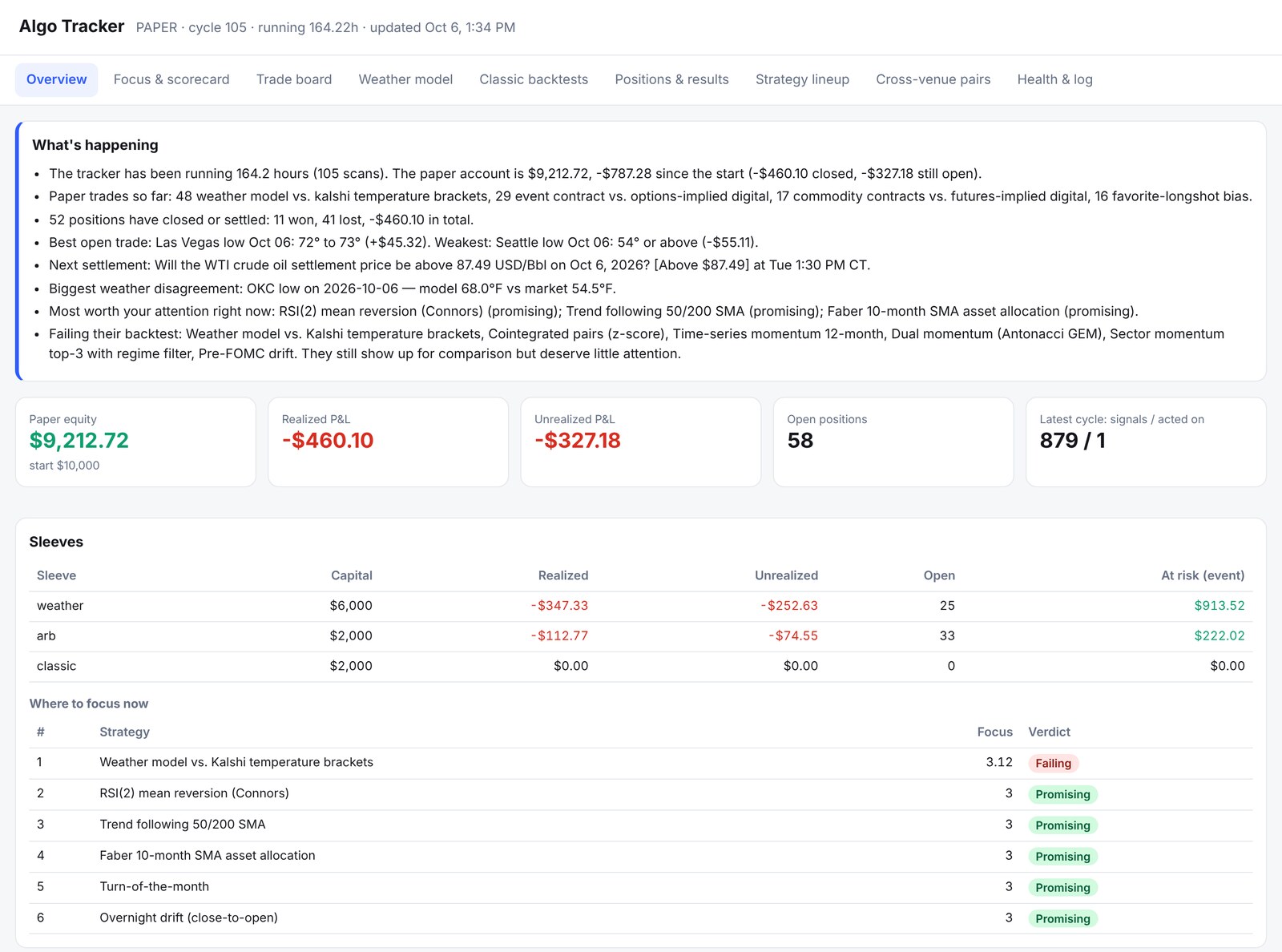
After its first three runs (September 29 to October 6), the paper account was down $787 on $10,000 across 110 trades. I needed to know whether that was bad luck or a model that was wrong, and which rules to change.
My contribution
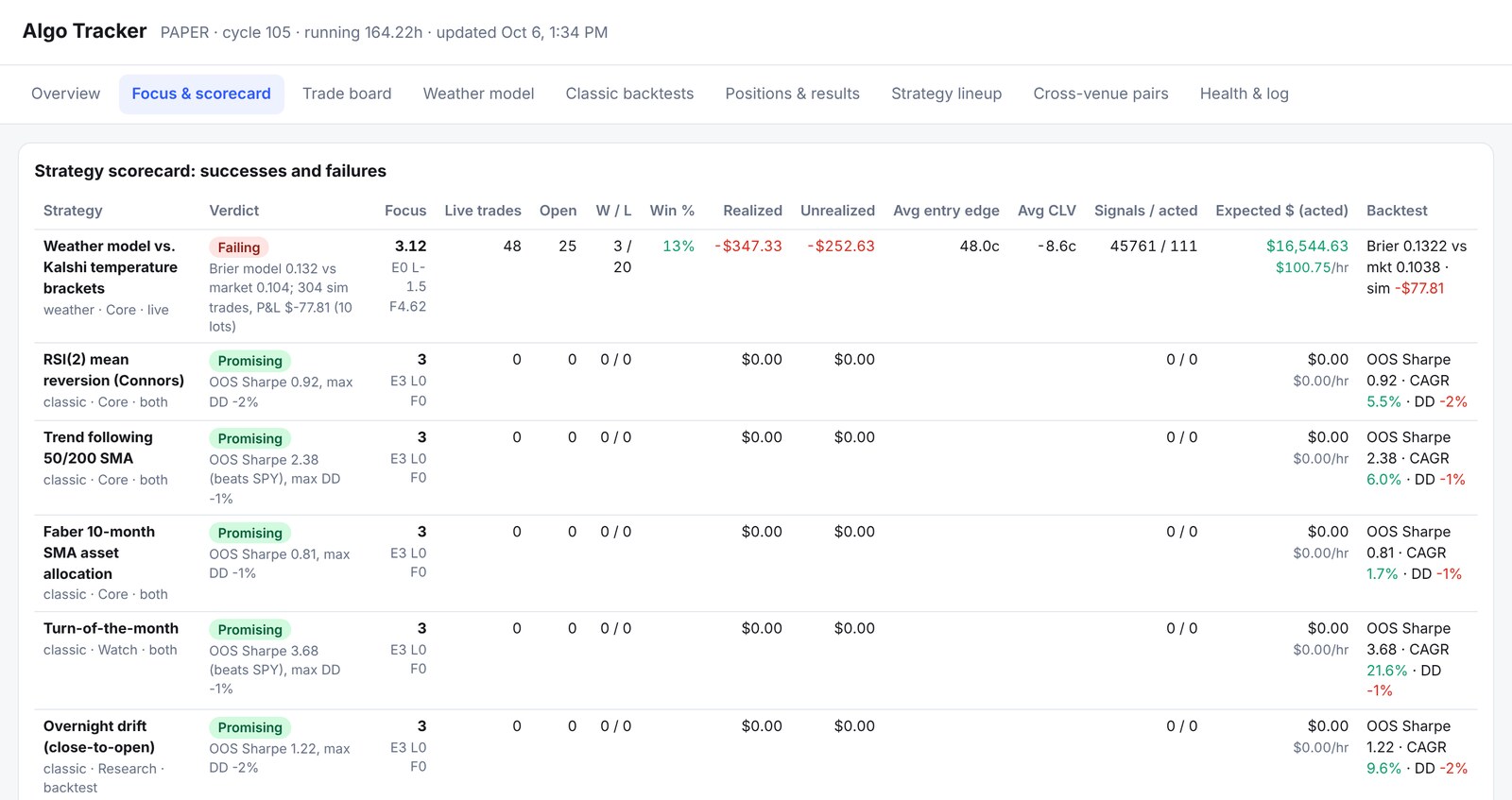
- Built the models: a temperature forecast for each contract’s weather station from NOAA/NWS and ensemble weather models, and prices for commodity and bitcoin contracts from futures prices and volatility. A browser dashboard shows positions, P&L and a scorecard for every strategy.
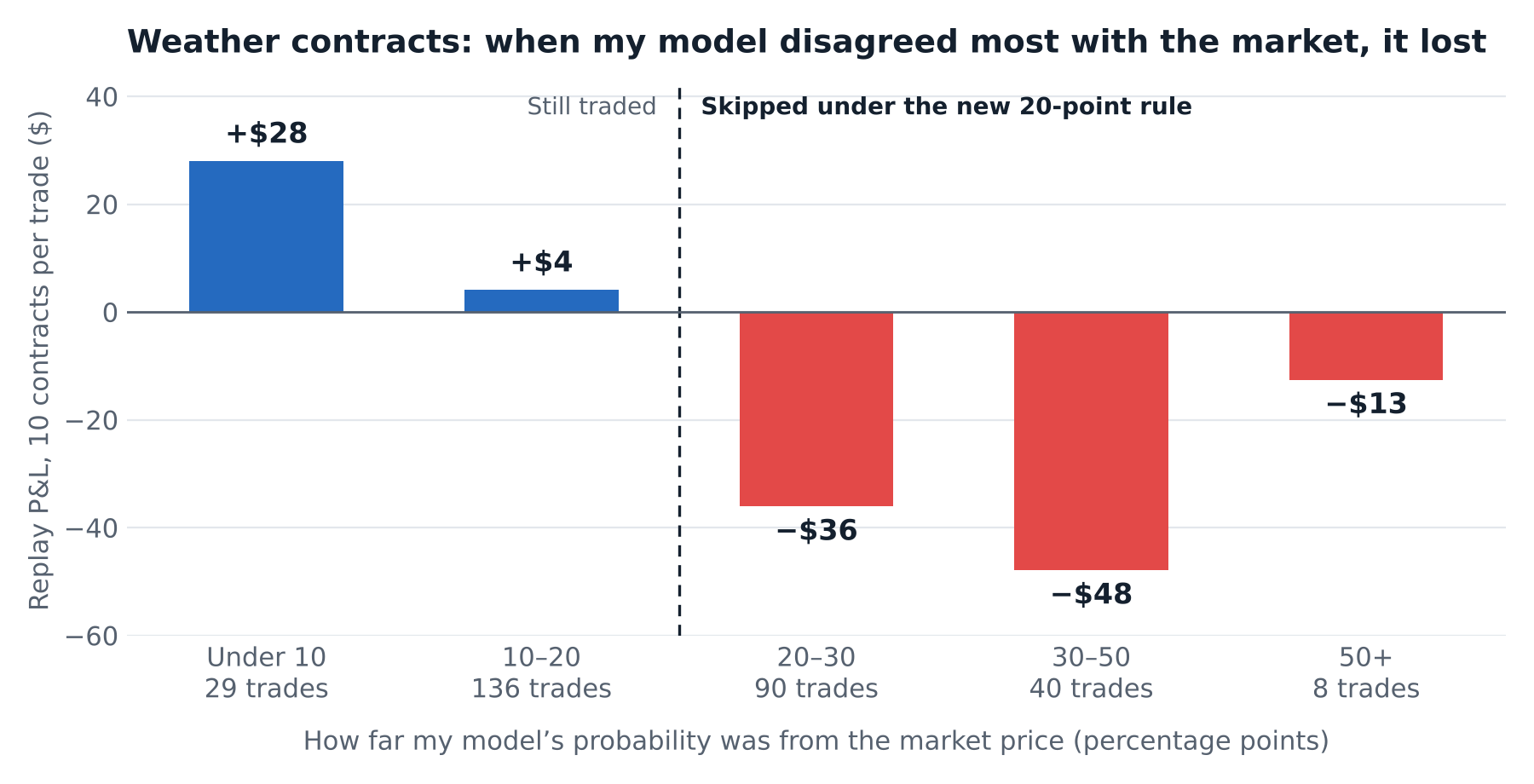
- Replayed every recorded quote and trade. On 882 settled weather contracts the market’s prices were more accurate than my model (forecast error 1.7°F vs. 2.7°F), and the losses came from the trades where the model disagreed with the market the most.
- Added a rule to skip any trade where the model and the market disagree by more than 20 percentage points, turned off the S&P 500 and Nasdaq contracts that lost at every volatility setting, and fixed a bug that had kept the stock strategies from ever trading.
Outcome / lesson
The most useful thing the system did was show me where my own model was wrong. When it disagreed with the market by more than 20 points, the market was usually right, so the edge was in the small disagreements, not the big ones.
Charts and slides
| Strategy | What went wrong | Change |
|---|---|---|
| Weather contracts | Lost most when the model disagreed most with the market | Skip trades with a gap over 20 points; adjust same-day forecasts toward live station readings |
| S&P 500 and Nasdaq contracts | Volatility too high for 1–3 hour contracts; won 1 of 19 | Turned off; bitcoin kept with lower volatility |
| Commodity contracts | Same volatility problem on low-probability contracts | Lower volatility, less weight on the model |
| Classic stock strategies | A bug skipped every rebalance, so they never traded | Fixed; they now trade at the next market open |
In my words
I built this system to turn investment ideas into testable hypotheses instead of relying on intuition. The first results were humbling: the market was a better forecaster than my model. That turned out to be the most useful finding, because it told me exactly which trades to stop making. Before I would trust any strategy with real money, I would want a long paper track record under the new rules.
Documents
If the preview does not load on your device, open the PDF in a new tab.
- Trade log by strategyPDF · 8 pages · all 110 paper trades, results by strategy, and the changes made
Paper trading only: real market prices and fees, no real money, and no live order route. Results come from a few weeks of runs and are not evidence of a lasting edge. Not investment advice.